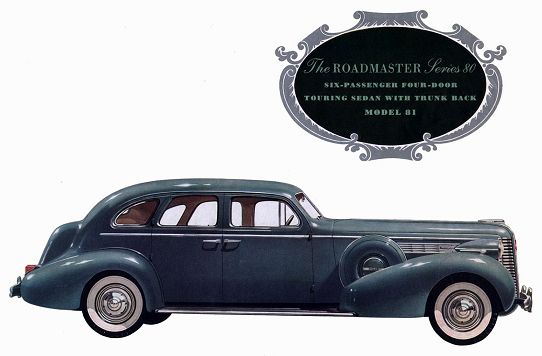
A couple of ads caught my eye the other day while reading the classifieds. One stated: "For Sale, 1950 Nash Ambassador, low miles, one owner, extra clean, a real classic, $8,000." The other read: "1938 Buick Series 80 Sedan, runs, some rust, needs total restoration, $8,000." The old Nash, obviously a "cream puff," is the same price as the older Buick which needs everything. The Nash is called a classic while the Buick doesn't make that claim. Which, if either, is really a "true" classic?
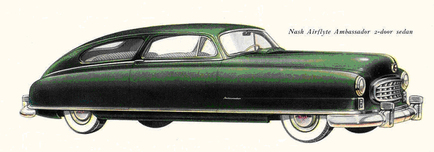
According to Webster "classic" is defined: "Of recognized value, serving as a standard of excellence; traditional, enduring; of historical value, historically memorable." The Buick probably fits that definition, but does the Nash meet any of the criteria?
A little history would be useful in clarifying the definition. After World War II America was riding high on it's victories and Detroit was back producing cars after having been called into service to make military vehicles for the war effort. Most of the early post-war cars were merely updated versions of what they had been producing at the outbreak of the war, and the plants were working overtime just to satisfy the voracious appetite of a car-starved populace. Any car made before World War II was just an old car, with those that had escaped the crusher during the war being relegated to the back of used car dealers' lots going for giveaway prices, or left to the uncertain fate of nature in back yards, fields or barns. By the early fifties, Detroit had finally modernized all their lines and everyone wanted one of the new, larger models with automatic transmissions, powerful V-8 engines, power steering, acres of chrome...and FINS! Americans' embrace of both the jet age and the "good life" was strongly reflected in their cars. The past and the depression were things to be discarded and forgotten.
The face of the American highway had changed. It was becoming increasingly difficult to find parts, particularly tires (except for big, ol' truck tires), for the older cars and as a result there were fewer and fewer of them on the road. There were a few people who, for reasons of nostalgia, historical responsibility or foresight, wanted to resurrect some of the old buggies; to try and restore them to their former glory. The few cars that parts were available for were the first and most likely candidates. As an example, Ford's Model A, built from 1928-1931, became popular again. Almost five million A's were manufactured in this country, creating a large after-market parts source. Because of that, and thanks to sources like the old J. C. Whitney catalogs, there was a plethora of cheap parts available, making restorations easy. Model A (and Horseless Carriage) clubs sprang up all around the country, holding tours and picnics, and driving them in parades. Eventually the picnics turned into car shows, with prizes being given to the best restored car, and the most authentic period costumes worn by the participants. This early competition led, of course, to better restorations. Other makes of cars were invited to attend and compete. More clubs came into being and the old car hobby and restoration market was born.
People were starting to dig around in the back yards, fields and barns to find the old, forgotten relics that were part of their youth. Throughout the sixties and early seventies you could find a Model A, which sold new for $375, for $50-$100, or a 1934 Packard, which sold new for around $4,000, for $600-$2,000. Today, in restored, show condition, and depending on whether it's a coupe, phaeton or roadster, a Model A will fetch between $6,000-$25,000 (depending on current market trends). The Packard, depending on engine and body combination, will reward it's owner with $50,000-$250,000 or more. The first acknowledged hunk of iron to go for over a million dollars was a prestigious Bugatti Royale which went for $8.5 million at Harrah's in 1985. With that sale the craftsmanship, inspiration and genius that had gone into so many of the world's fine automobiles was finally acknowledged and accepted as an art form as well as a worthwhile investment. The value of most cars started climbing, some into the stratosphere.
There are several factors involved in establishing a value for an old car; rarity, desirability, historical significance, market demand and cost of restoration. It was the last two, market demand and cost of restoration, that fueled the price escalations of the late 80s/early 90s, regardless of whether or not a car had achieved "true" classic status. Market demand increased due to the proliferation of well-established baby-boomers, now able to indulge themselves in the acquisition "at any price" of those items that brought back fond memories of their past. That explanation alone was the major reason people were paying $50,000+ for 1957 Chevy convertibles and 1957 Thunderbirds, and $125,000 for 1959 Cadillac Biarritz convertibles and 1970 Plymouth Hemi-Cuda convertibles.
When it comes to the cost of restoration, there are almost as many nuts and bolts holding together a 1950 Nash as a 1934 Packard (not really, I know, but I'm just trying to make a point!), theoretically making one just as expensive as the other to restore. You certainly could put just as much time and attention to detail in restoring both cars. In actuality (as we all know) the Packard is more expensive to restore because so much hand crafting is required ...just like when it was built originally. Some owners of Packards and other such cars also have a tendency to over-restore, making the car jewel-like, to be rarely driven, thereby (hopefully) insuring a high return on their art, or investment. The Packard is intrinsically worth much more because of it's rarity and uniqueness. But what ultimately determines an individual car's monetary value? Obviously whatever price the buyer and seller agree upon. But, does market value mean anything in determining whether or not a car is (or should be) a classic, or vice-versa? Although that question begs discussion, it ultimately, however, skirts the issue at hand and will be addressed in other articles.
To answer the original question of whether the Buick and/or the Nash are, indeed, classics, let's examine the criteria of the acknowledged, authoritative organization that defines the category, the Classic Car Club of America (CCCA). A classic is any "...fine or unusual, foreign or domestic motor car manufactured between 1925-1948, distinguished for fine design, high engineering standards and superior workmanship". Clearly, by that definition, the Bugatti and Packard are true, acknowledged classics, the Model A, Chevy, Thunderbird, ’59 Cadillac, and Plymouth are not. The Buick, being a series 80, is considered a classic by the CCCA. There are few exceptions to the parameters outlined by them.
Does that mean that the bathtub Nash is just an old car? Well, yes and no. To paraphrase an old axiom, "One person's old car is another person's classic." Among purists the CCCA definition is law. What the CCCA does not consider, however, is the generation gap. To the founders of the CCCA in the 50s, the cars of the 20s, 30s and 40s were the cars of their youth, their nostalgia.
A little history would be useful in clarifying the definition. After World War II America was riding high on it's victories and Detroit was back producing cars after having been called into service to make military vehicles for the war effort. Most of the early post-war cars were merely updated versions of what they had been producing at the outbreak of the war, and the plants were working overtime just to satisfy the voracious appetite of a car-starved populace. Any car made before World War II was just an old car, with those that had escaped the crusher during the war being relegated to the back of used car dealers' lots going for giveaway prices, or left to the uncertain fate of nature in back yards, fields or barns. By the early fifties, Detroit had finally modernized all their lines and everyone wanted one of the new, larger models with automatic transmissions, powerful V-8 engines, power steering, acres of chrome...and FINS! Americans' embrace of both the jet age and the "good life" was strongly reflected in their cars. The past and the depression were things to be discarded and forgotten.
The face of the American highway had changed. It was becoming increasingly difficult to find parts, particularly tires (except for big, ol' truck tires), for the older cars and as a result there were fewer and fewer of them on the road. There were a few people who, for reasons of nostalgia, historical responsibility or foresight, wanted to resurrect some of the old buggies; to try and restore them to their former glory. The few cars that parts were available for were the first and most likely candidates. As an example, Ford's Model A, built from 1928-1931, became popular again. Almost five million A's were manufactured in this country, creating a large after-market parts source. Because of that, and thanks to sources like the old J. C. Whitney catalogs, there was a plethora of cheap parts available, making restorations easy. Model A (and Horseless Carriage) clubs sprang up all around the country, holding tours and picnics, and driving them in parades. Eventually the picnics turned into car shows, with prizes being given to the best restored car, and the most authentic period costumes worn by the participants. This early competition led, of course, to better restorations. Other makes of cars were invited to attend and compete. More clubs came into being and the old car hobby and restoration market was born.
People were starting to dig around in the back yards, fields and barns to find the old, forgotten relics that were part of their youth. Throughout the sixties and early seventies you could find a Model A, which sold new for $375, for $50-$100, or a 1934 Packard, which sold new for around $4,000, for $600-$2,000. Today, in restored, show condition, and depending on whether it's a coupe, phaeton or roadster, a Model A will fetch between $6,000-$25,000 (depending on current market trends). The Packard, depending on engine and body combination, will reward it's owner with $50,000-$250,000 or more. The first acknowledged hunk of iron to go for over a million dollars was a prestigious Bugatti Royale which went for $8.5 million at Harrah's in 1985. With that sale the craftsmanship, inspiration and genius that had gone into so many of the world's fine automobiles was finally acknowledged and accepted as an art form as well as a worthwhile investment. The value of most cars started climbing, some into the stratosphere.
There are several factors involved in establishing a value for an old car; rarity, desirability, historical significance, market demand and cost of restoration. It was the last two, market demand and cost of restoration, that fueled the price escalations of the late 80s/early 90s, regardless of whether or not a car had achieved "true" classic status. Market demand increased due to the proliferation of well-established baby-boomers, now able to indulge themselves in the acquisition "at any price" of those items that brought back fond memories of their past. That explanation alone was the major reason people were paying $50,000+ for 1957 Chevy convertibles and 1957 Thunderbirds, and $125,000 for 1959 Cadillac Biarritz convertibles and 1970 Plymouth Hemi-Cuda convertibles.
When it comes to the cost of restoration, there are almost as many nuts and bolts holding together a 1950 Nash as a 1934 Packard (not really, I know, but I'm just trying to make a point!), theoretically making one just as expensive as the other to restore. You certainly could put just as much time and attention to detail in restoring both cars. In actuality (as we all know) the Packard is more expensive to restore because so much hand crafting is required ...just like when it was built originally. Some owners of Packards and other such cars also have a tendency to over-restore, making the car jewel-like, to be rarely driven, thereby (hopefully) insuring a high return on their art, or investment. The Packard is intrinsically worth much more because of it's rarity and uniqueness. But what ultimately determines an individual car's monetary value? Obviously whatever price the buyer and seller agree upon. But, does market value mean anything in determining whether or not a car is (or should be) a classic, or vice-versa? Although that question begs discussion, it ultimately, however, skirts the issue at hand and will be addressed in other articles.
To answer the original question of whether the Buick and/or the Nash are, indeed, classics, let's examine the criteria of the acknowledged, authoritative organization that defines the category, the Classic Car Club of America (CCCA). A classic is any "...fine or unusual, foreign or domestic motor car manufactured between 1925-1948, distinguished for fine design, high engineering standards and superior workmanship". Clearly, by that definition, the Bugatti and Packard are true, acknowledged classics, the Model A, Chevy, Thunderbird, ’59 Cadillac, and Plymouth are not. The Buick, being a series 80, is considered a classic by the CCCA. There are few exceptions to the parameters outlined by them.
Does that mean that the bathtub Nash is just an old car? Well, yes and no. To paraphrase an old axiom, "One person's old car is another person's classic." Among purists the CCCA definition is law. What the CCCA does not consider, however, is the generation gap. To the founders of the CCCA in the 50s, the cars of the 20s, 30s and 40s were the cars of their youth, their nostalgia.
While it is certainly true that the glorious "Golden Age" of the automobile, exemplifying a zenith of craftsmanship and tasteful design, was between 1925-1939, those cars are antiquities to the baby-boomers whose halcyon days were the fifties and sixties. The cars of their era may have been mass produced, and lack the fine hand crafted touch, but "Boomers" remember sitting in the back seat of the old family Hudson Hornet at the drive-in movie, barely able to see over the front seat, being scared out of their wits watching "Attack Of The Crab Monster", and laughing as dad played "spotlight tag" on the screen with the other cars during intermission. They probably sat on Dad's lap and steered for the first time in the family's 1957 Chevy station wagon going to Crater Lake during summer vacation. There are memories of their high school days, with the ink on their new driver's license not even dry, pleading with Uncle Jim to let them drive his new 1965 Sebring Red, fuel-injected, Corvette Sting Ray when he came over to show it off. Chances are, there are even fond memories of going to grandpa's house for Thanksgiving and seeing his shiny, maroon '50 Nash Ambassador with clear plastic seat covers installed on the "Sky-Lounge" seats that made into a bed, parked safely in a tidy garage. Those personal memories and dreams of each generation's youth define what is classic later in life, making the "historically memorable" portion of Mr. Webster's definition apply to that old, classic, bathtub Nash.
 RSS Feed